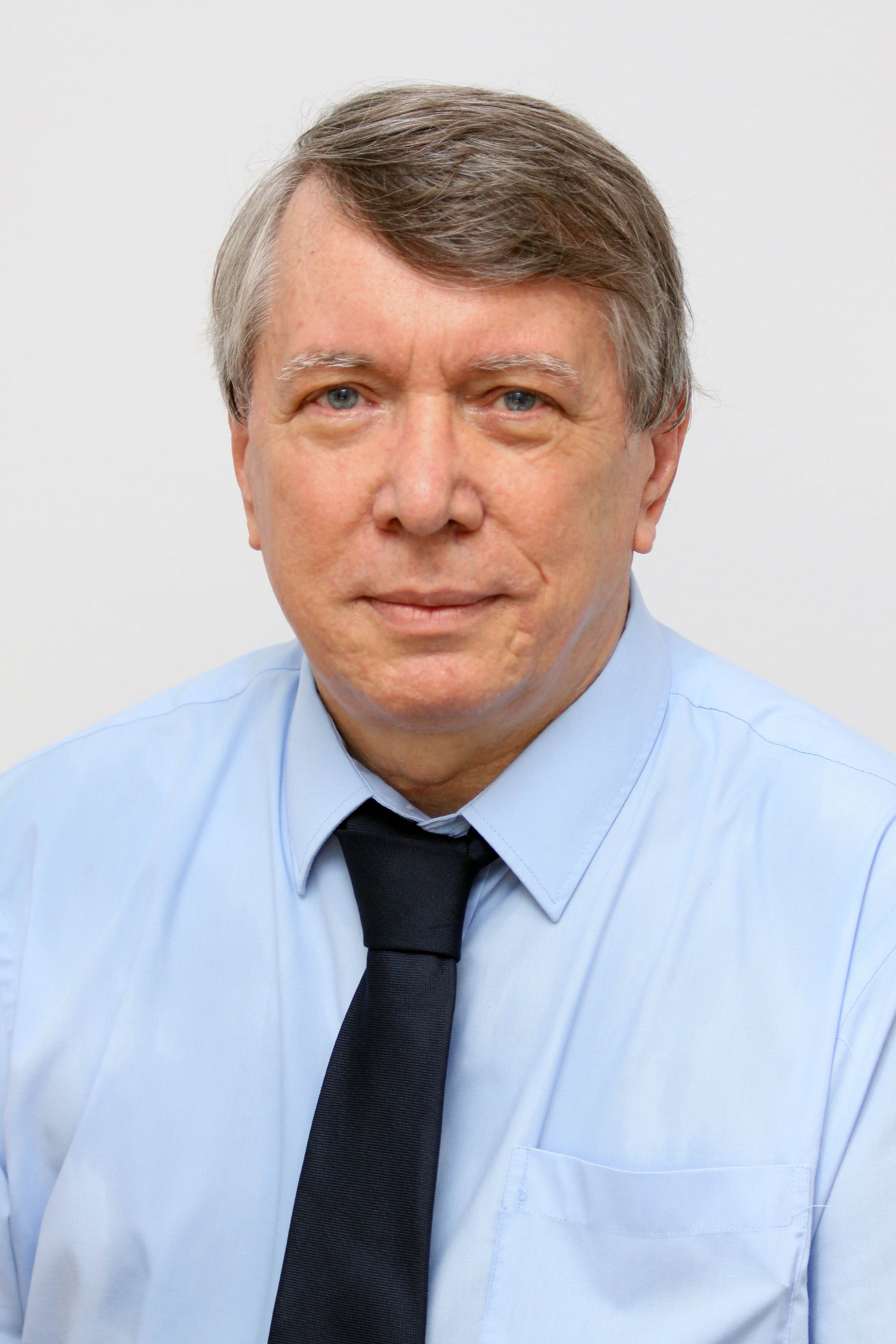
Pál Perjési
University of PecsHungary
Pál Perjési graduated as a pharmacist from the Albert Szent-Györgyi University of
Medicine (now the University of Szeged, Szeged, Hungary). After completing his studies, he
worked as a scholarship intern at the Institute of Pharmaceutical Chemistry of the University
from 1979 to 1981. There, he worked on the synthesis of isoquinoline derivatives under the
supervision of Professor Gábor Bernáth.
He has been working at the University of Pécs (Pécs, Hungary) since September 1981.
In December 2000, he obtained habilitation, and from January 1, 2002, to December 31, 2020,
he was the director of the Institute of Pharmaceutical Chemistry. Here, he has been involved
in bioorganic chemistry research. His studies focused on understanding the reactivity of
unsaturated carbonyl compounds towards nucleophilic reagents and the stereochemistry of the
resulting adducts. As a result of his work in the field, he successfully defended his doctoral
dissertation and, in 1994, was awarded the degree of Candidate of Chemical Sciences (CCS)
from the Hungarian Academy of Sciences. Furthermore, he obtained the qualifications of a
specialist pharmacist in “Preparative chemical laboratory studies” in 1985 and “Toxicology”
in 1994.
In 1990-1991, he worked for 12 months at the Institute of Medicinal Chemistry at the
University of Washington (Seattle, WA, USA) as an International Fogarty Fellow. His
research, under the supervision of Professor Sidney D. Nelson, focused on the in vivo
metabolism of paracetamol. Based on the knowledge acquired here, he began his research on
metabolism and intestinal elimination of foreign substances in the animal experimental
laboratory established at the Institute of Pharmaceutical Chemistry (University of Pécs).
Between 2001 and 2003, he spent 15 months at the University of Florida (Gainesville, FL,
USA), in the laboratory of Professor László Prókai, where he worked on the synthesis and
metabolic transformations of estrone derivatives.
After obtaining his CCS degree, his professional interest shifted to investigating the
structure-activity relationships underlying the antitumor and cytoprotective effects of
chalcones and their cyclic chalcone analogs. To understand the structure-activity relationships
of the compounds in vitro with respect to tumor cell cytotoxicity, he synthesized a large
number of chalcones, cyclic chalcone analogs, and ferrocenyl chalcone derivatives. He
performed some of the latter syntheses as a DAAD scholarship holder at the Kekülé Institute
of the University of Bonn (Bonn, Germany). To interpret the in vitro cytotoxicity of the
synthesized compounds against tumor cells, he compared the stereochemical and electronic
properties of the derivatives with different ring sizes and substitution patterns using UV-Vis,
IR, and 13 C NMR spectroscopy.
When examining the relationship between IC 50 values of the chalcone derivatives with
their cytotoxicity and thiol reactivity, he found that the most effective seven-membered ring
analogs have the lowest thiol reactivity. Thus, based on investigations of the cell cycle and
thiol reactivity, he found that the compounds' action may be based on a non-covalent
interaction.
2
While investigating the thiol-reactivity of open-chain chalcones and cyclic chalcone
analogs, he recognized relationships between the ring size, the aromatic ring’s substitution,
and the thiol-reactivity of the analogous derivatives. To better understand the recognized
relationships, he has developed an ongoing cooperation with Professor Hamilton Napolitano’s
research group at the State University of Goiás (Anápolis, GO, Brazil).
As a result of his research work, he is the co-author of 162 published papers, 4 patents,
1 book, 9 book chapters, and 2 conference papers published in books and refereed journals.